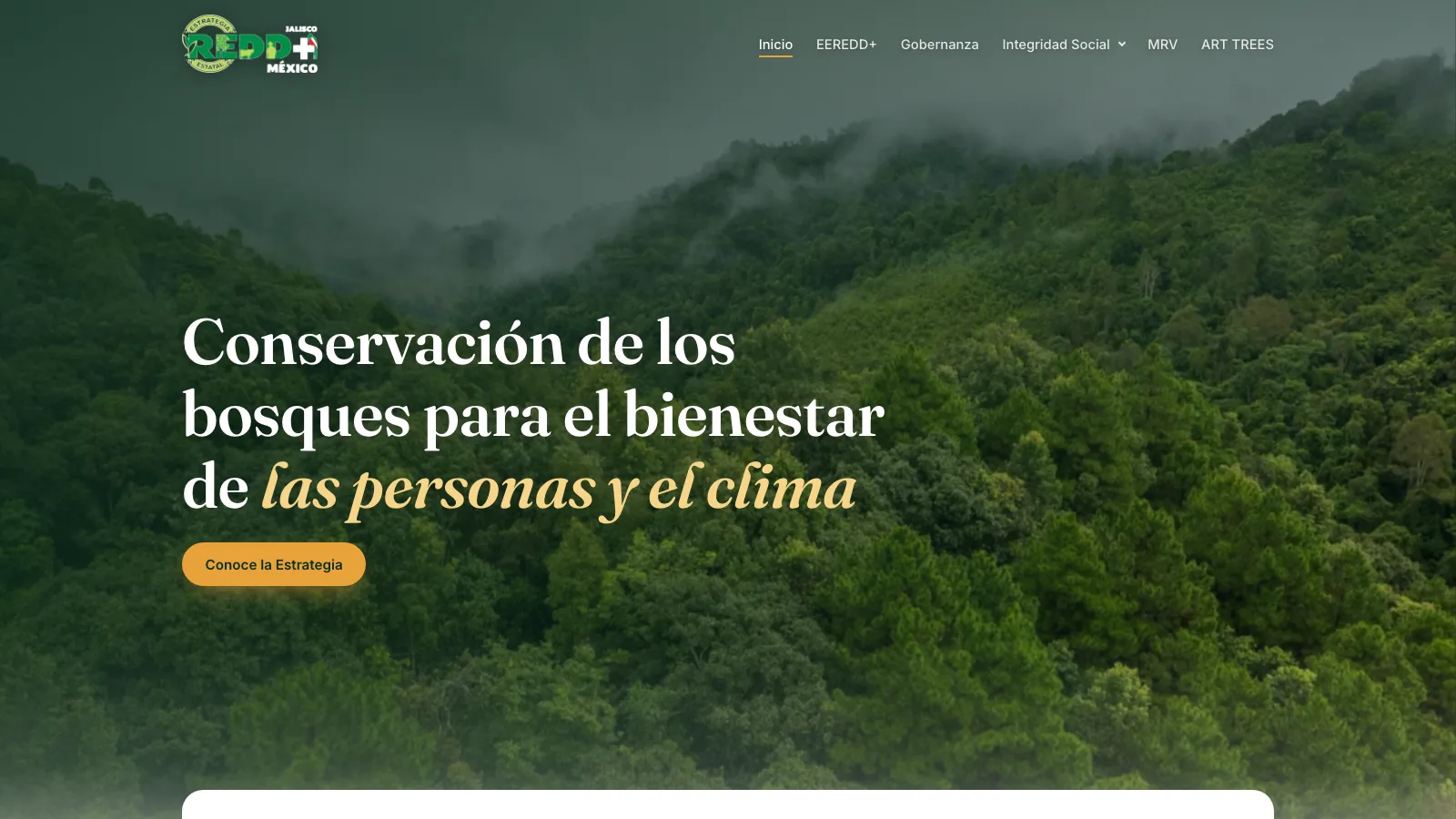
01 · Problem
A technical policy, scattered across many places
REDD+ is an international mechanism to reduce emissions caused by deforestation and forest degradation. Its technical information (the state strategy, governance, social safeguards, results monitoring and the international ART TREES certification) was scattered across different documents and websites.
For a forest community it was hard to understand, and for an international evaluator it was hard to verify. The state also needed a clear channel to receive grievances and be accountable.
02 · Users
Three audiences, one portal
Communities, ejidos and local organizations
They need to understand what REDD+ is, how it benefits them and how to file a grievance.
International evaluators and organizations
They need to quickly find official documents and the certification status.
Citizens, academia and civil society
They want to follow the progress of the strategy.
03 · UX/UI proposal
From simple to technical
- Component-based architecture: the policy was organized into five sections that follow the official REDD+ structure: State Strategy (EEREDD+), Governance, Social Integrity, MRV (Monitoring, Reporting and Verification) and ART TREES. Social Integrity is in turn divided into safeguards, benefit sharing, participation and the grievance mechanism.
- From simple to technical: the homepage explains what each letter of REDD+ means before going into detail, and an acronym glossary accompanies the whole site.
- A single library: all official documentation (strategy, reports, regulations, minutes and Official Gazette publications) lives in one place, with search and filters by component.
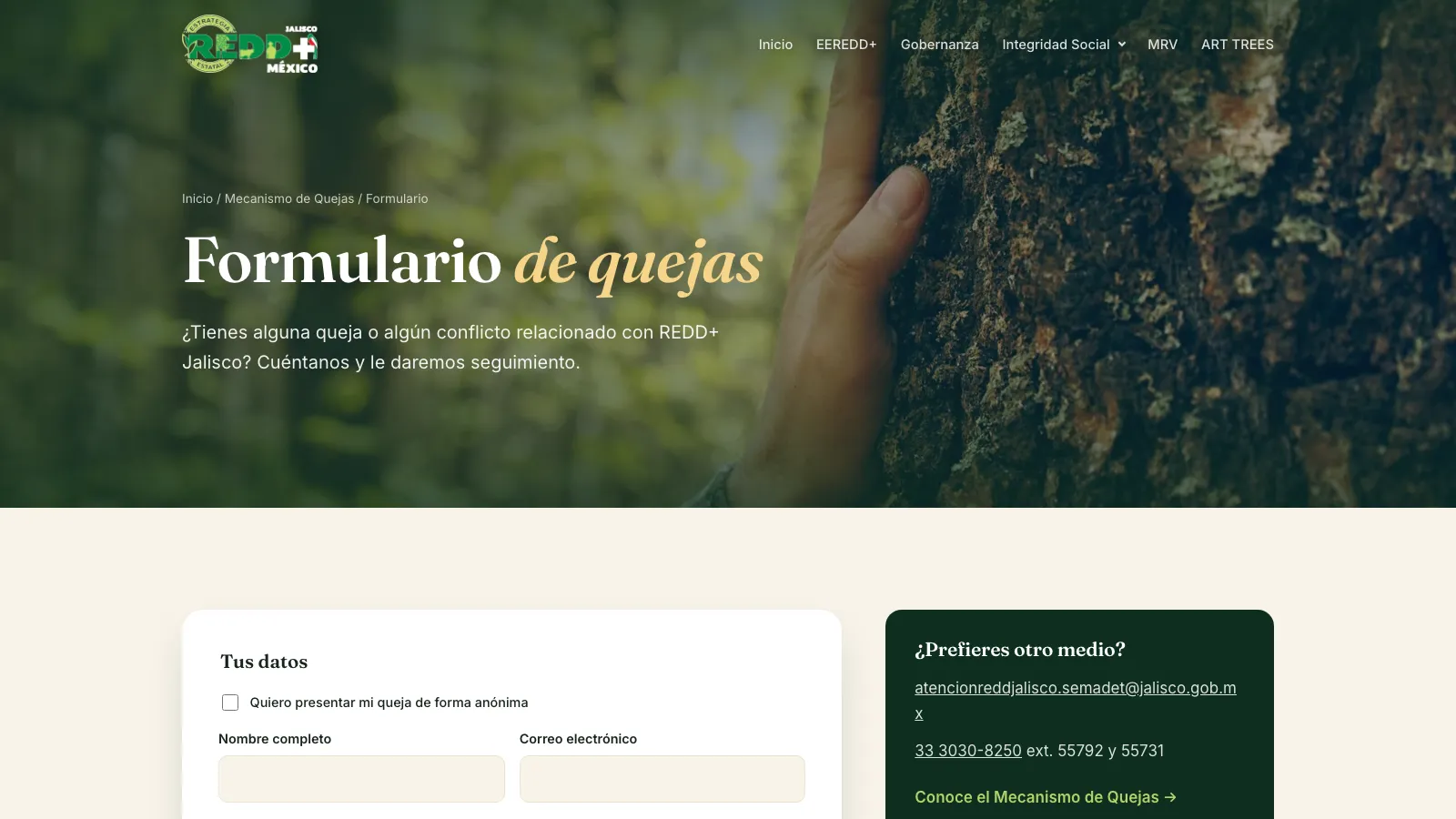
- Visible accountability: access to the grievance mechanism appears on every page, with a form that allows anonymous complaints and lets people choose how to receive the answer.
- A timeline of key events (Climate Week Jalisco, Climate Week NYC, the ART TREES process) shows that the strategy is moving forward.
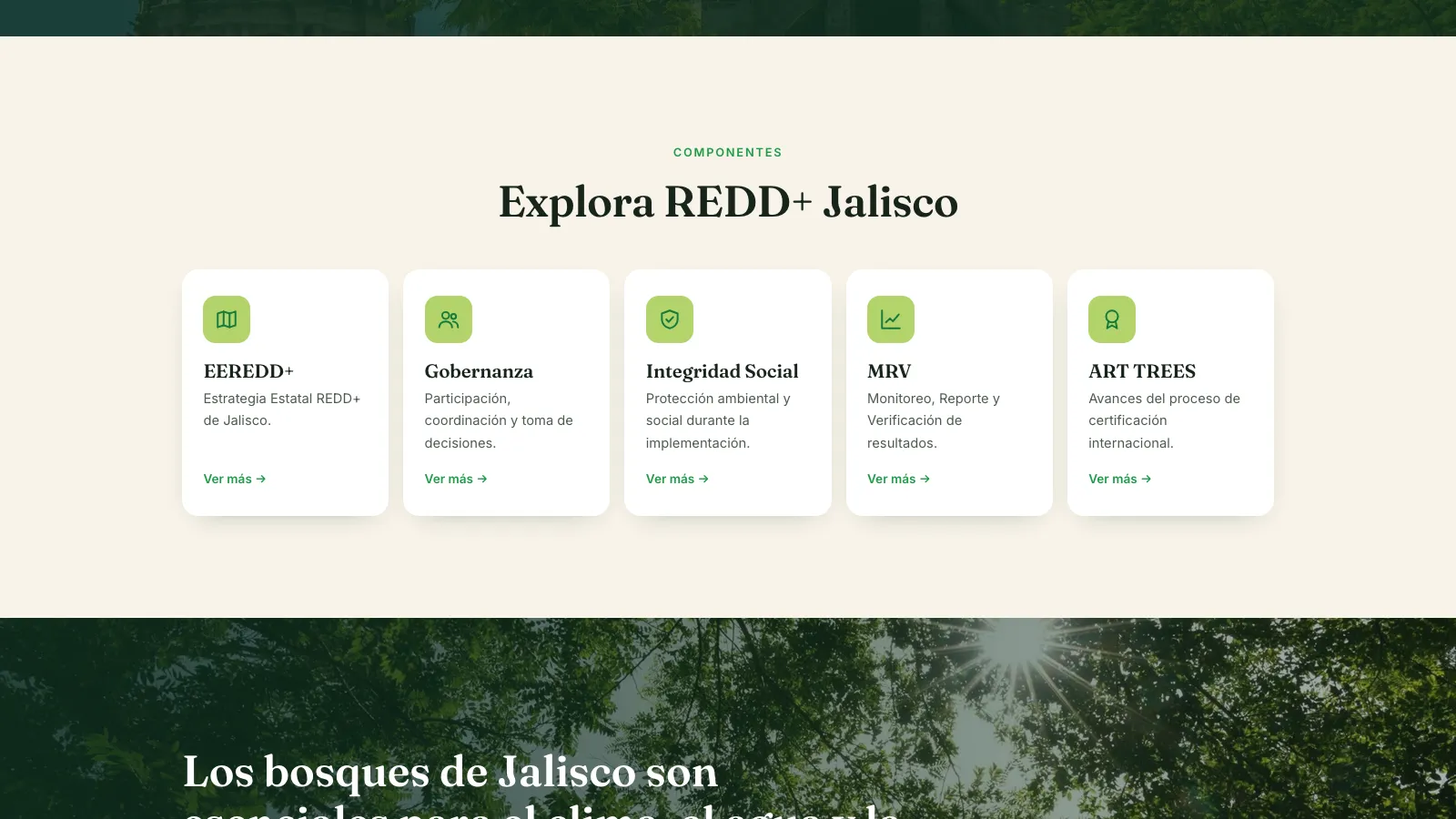
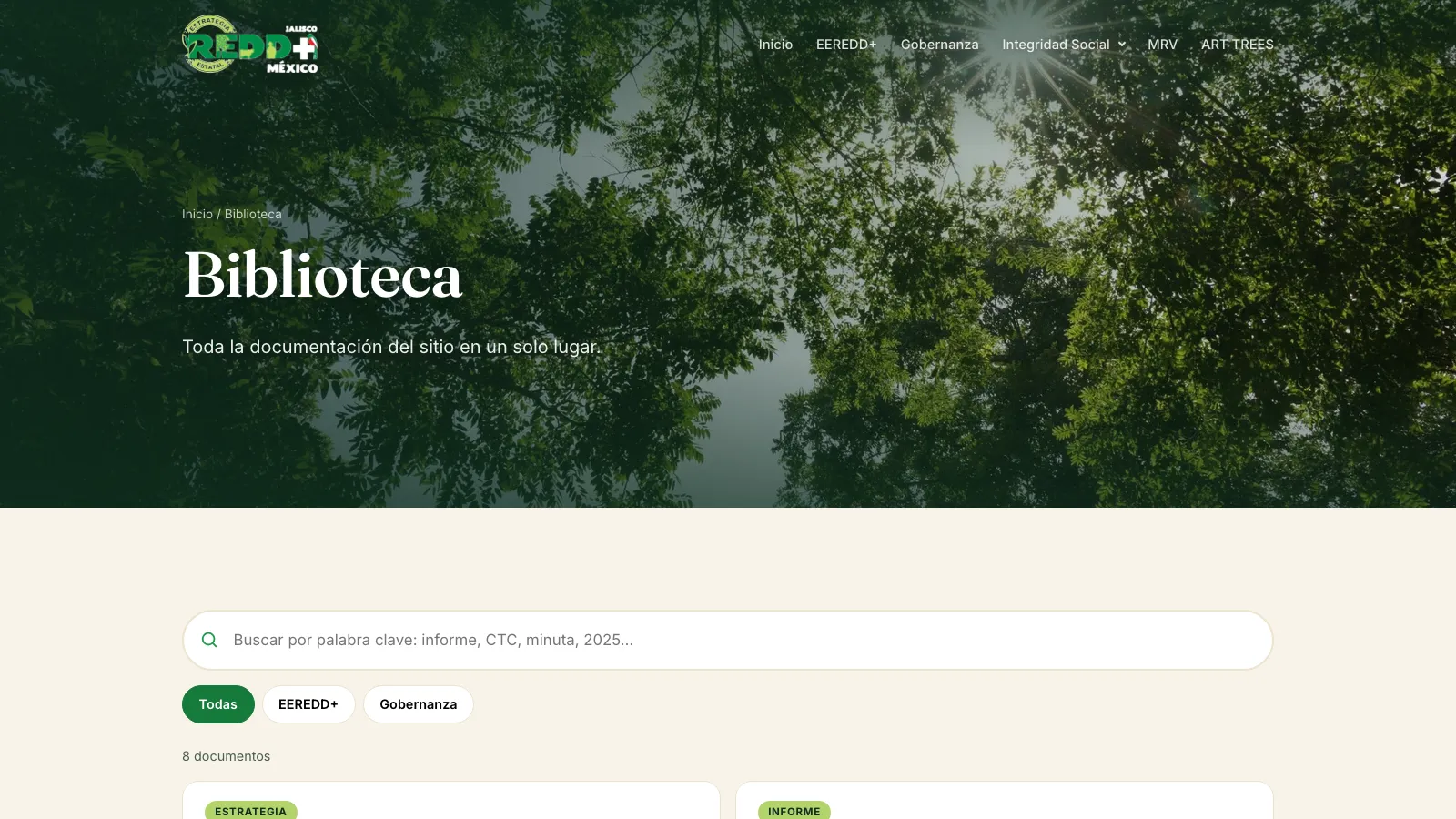
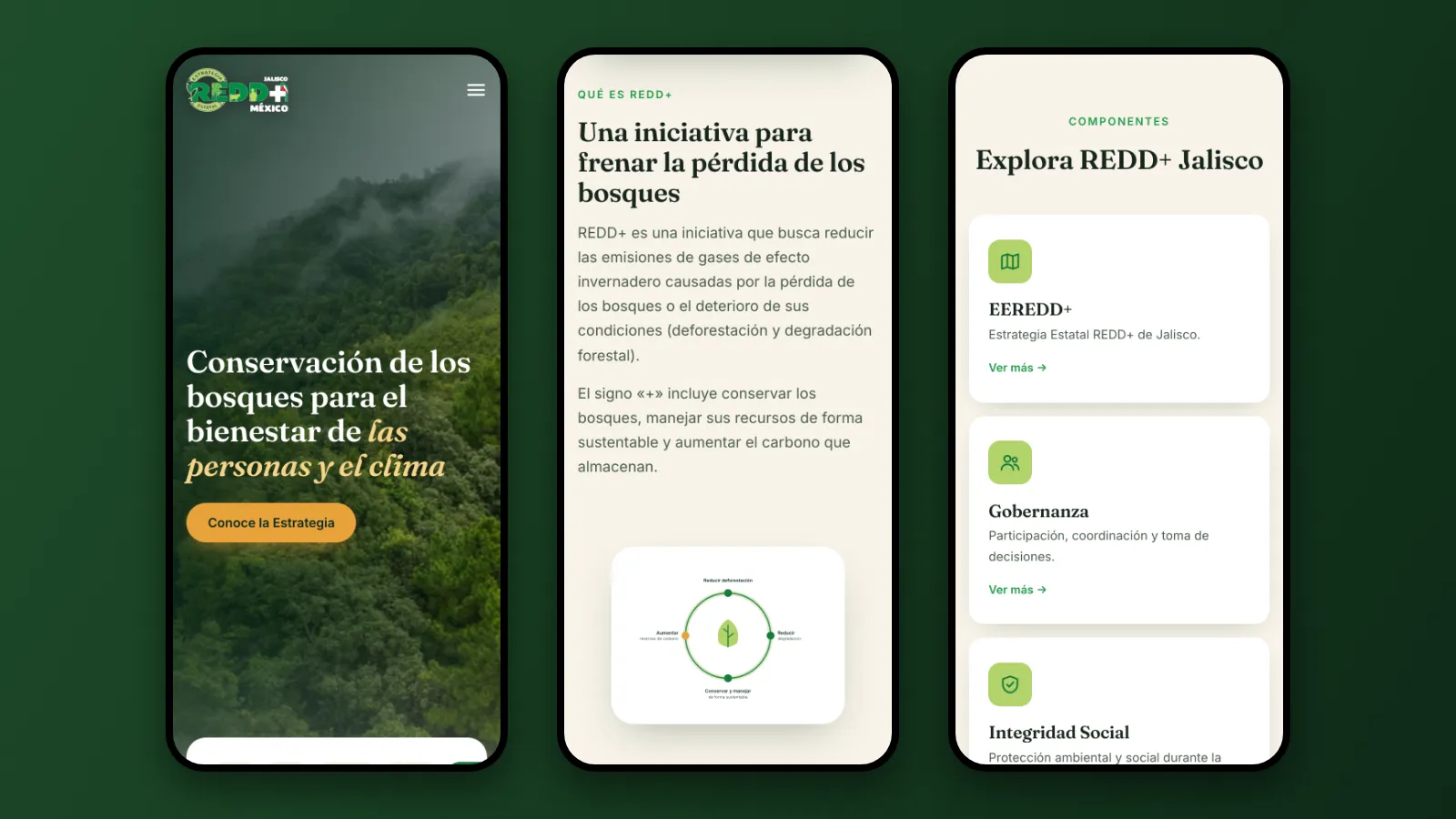
04 · Creative solution
A climate policy told as a story
Turning a technical climate policy into a relatable story: "Forest conservation for the well-being of people and the climate".
The design uses photography of Jalisco's forests, an editorial serif typeface and a warm tone, so that a forest community and an international evaluator each find what they need on the same site.
05 · Deliverables
What the project includes
- Information architecture for the unified portal
- Responsive UX/UI design
- Working prototype in HTML, CSS and JS with more than 15 pages
- Document library with search and filters
- Grievance mechanism form, with an anonymous option
- Acronym glossary and privacy notice
06 · Result
Under review with the client
The prototype is under review with the client. The goal is to publish the official portal for Climate Week.