01 · Problem
Grades and tests live in separate worlds
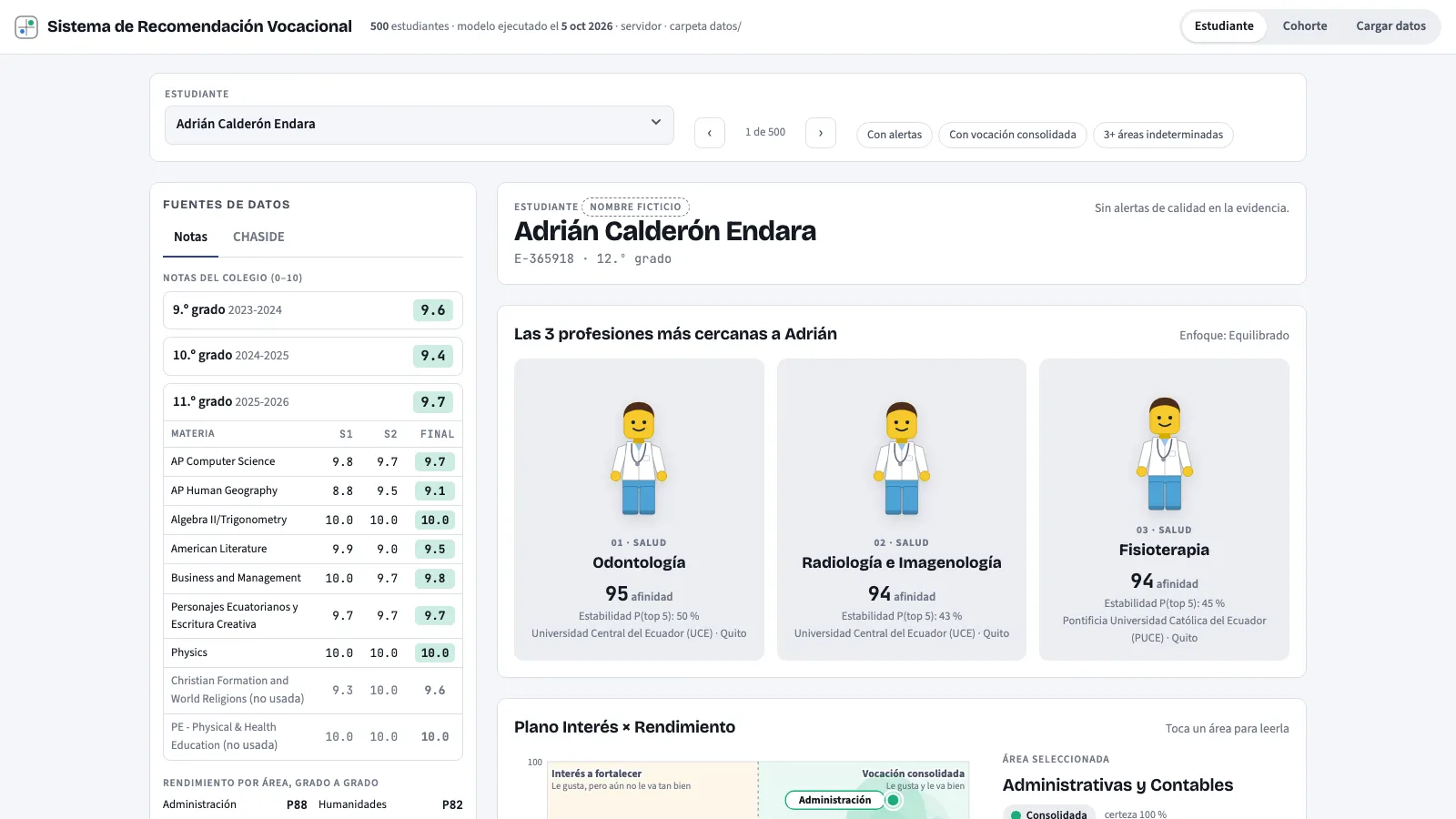
In a high school, vocational tests and grades live in separate worlds. The counseling department applies the test once, in the final year, without cross-checking it against six years of academic history. The result is a snapshot of what the student likes today, not a reading of what they are good at, and teachers and parents have no clear tool to support the decision.
02 · Users
Three perspectives on the same decision
Student counseling
Needs to see each student and the whole class, and know who to review first.
Teachers and parents
Need to understand the result without knowing statistics.
The student
Wants to know which careers fit them and where to study them.
03 · Research
Real data, explainable model
- Analysis of the academic records and vocational tests the school uses. CHASIDE was chosen as the base structure because it is the most widely used test in Ecuador. It organizes vocation into 7 areas.
- Model comparison: Bayesian network versus decision trees, evaluated against the quality standard for AI systems ISO/IEC 25059:2023. The Bayesian network was chosen because it explains its decisions and measures its own uncertainty.
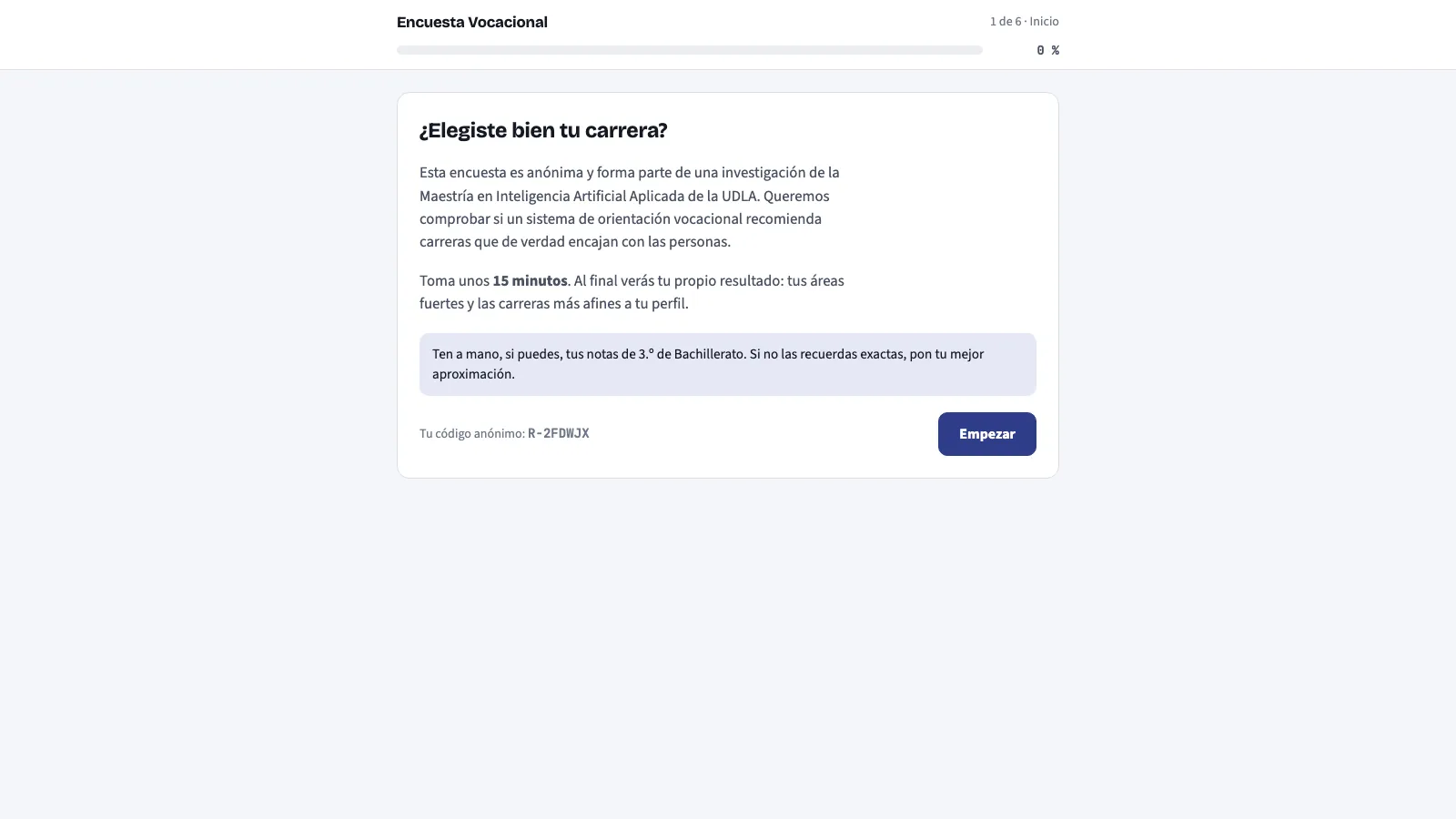
- To validate with real cases, an anonymous survey for first-year university students was published. It asks about their high school grades, vocational profile, the career they chose and how satisfied they are, and gives them their own result at the end. It is already receiving responses.
04 · Findings
A model that knows how much it knows
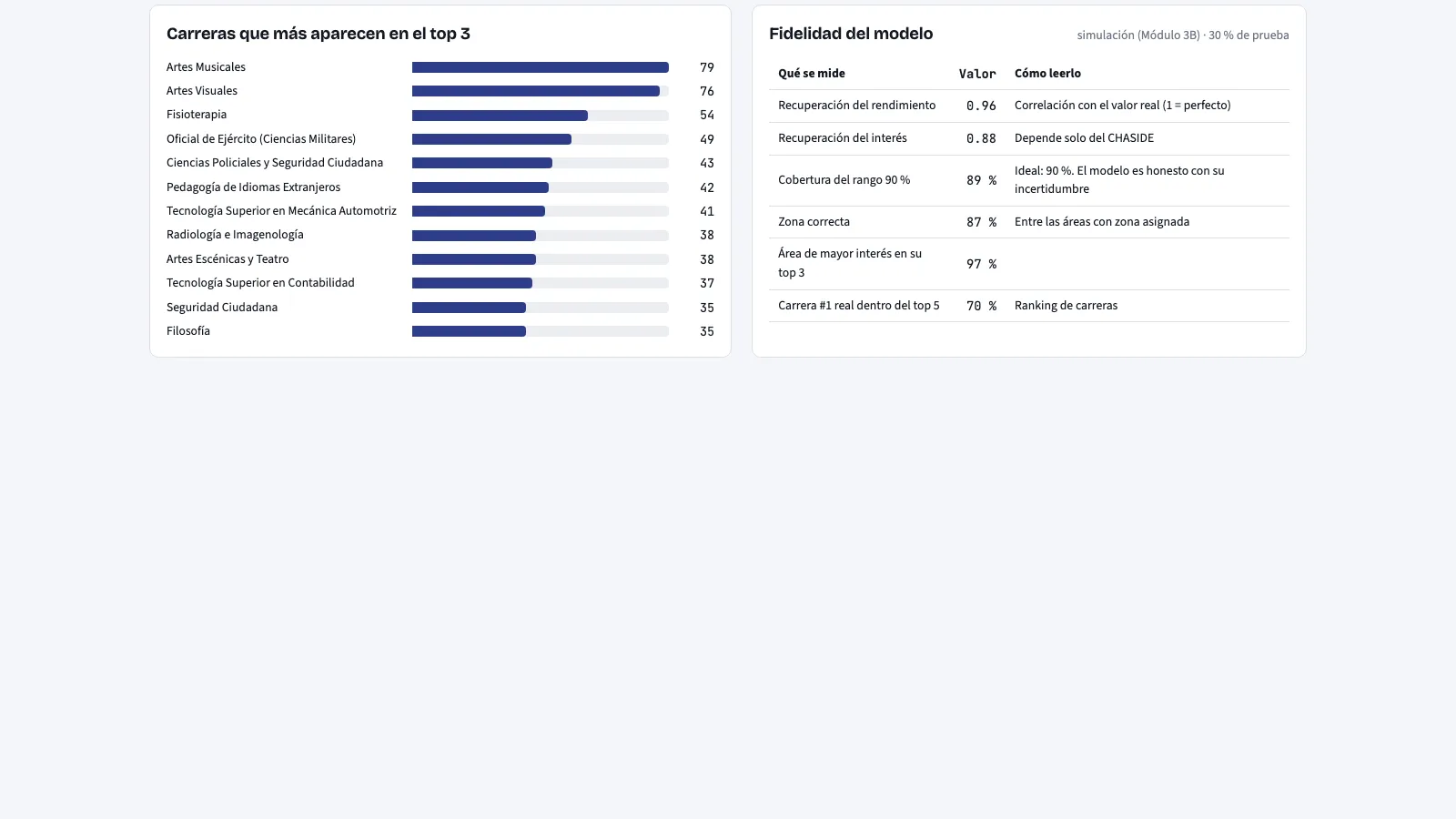
Results of the simulation with 500 fictitious students and 30% of the data held out for testing:
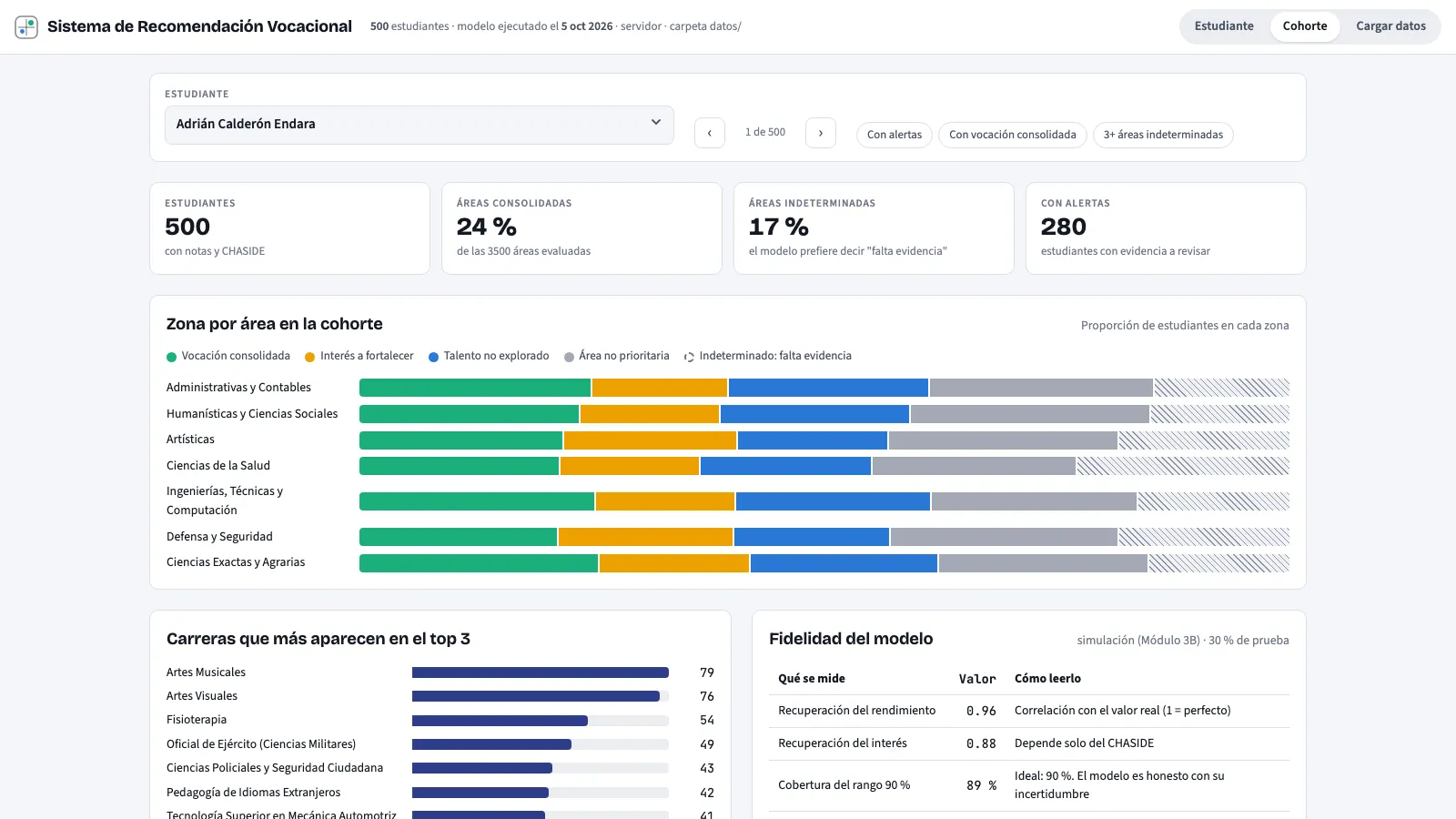
correlation when recovering each student's actual performance.
of vocational zones assigned correctly.
of cases with the area of greatest interest in the top 3.
coverage of the 90% confidence interval, meaning the model is honest about its uncertainty.
Results with simulated data
05 · UX/UI proposal
A map instead of a score
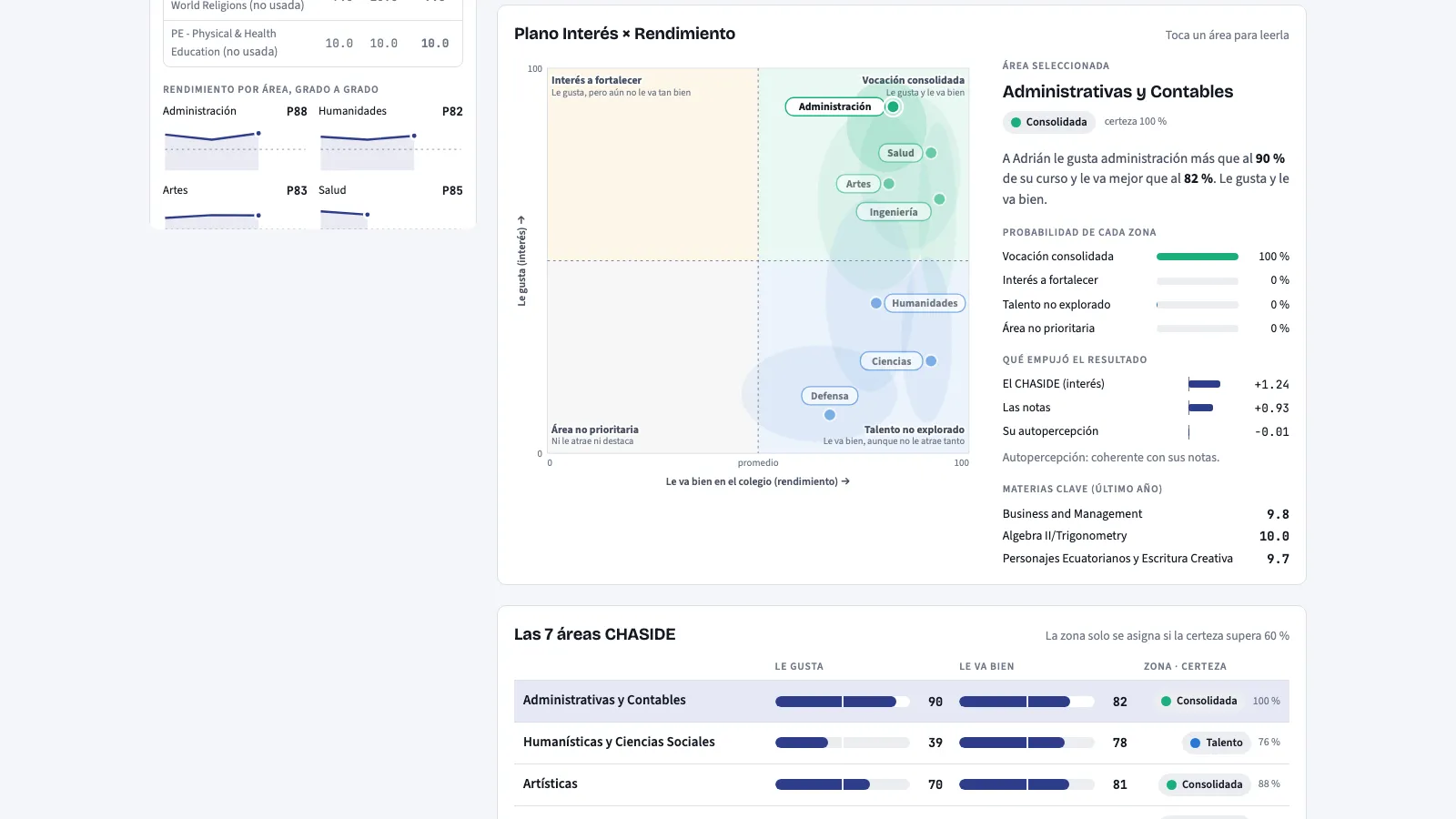
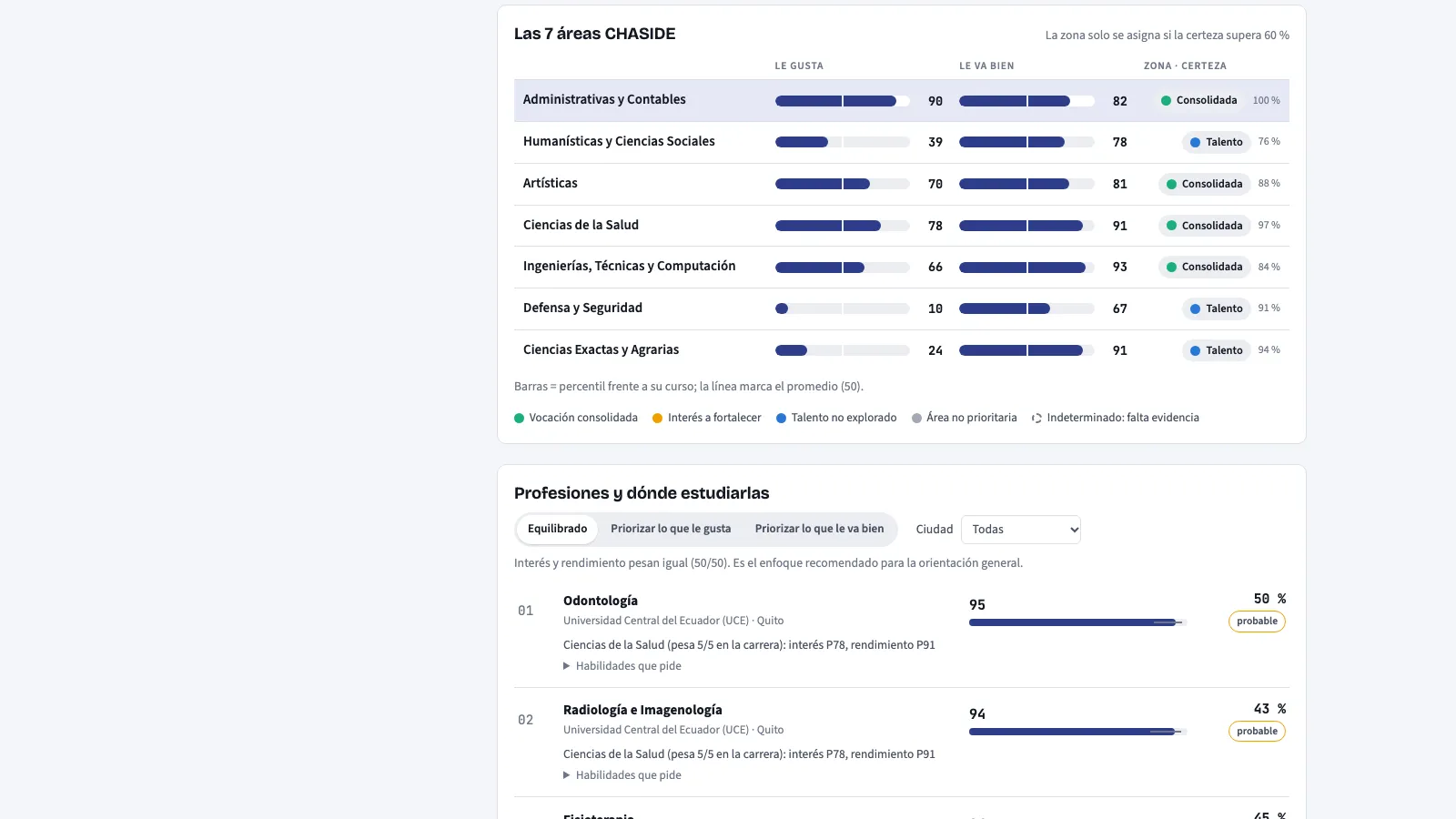
- A map instead of a score. Each area is placed on a two-axis map, likes it (interest) and does well (performance), with four zones in plain language: established vocation, interest to strengthen, unexplored talent and non-priority area.
- Explain, don't just recommend. Each result shows what drove it: the test, the grades or the student's self-perception, and the key subjects of the final year.
- Two views: Student, for the one-on-one conversation, and Cohort, so counseling can see the whole class and filter who to attend first (with alerts, established vocation or undetermined areas).
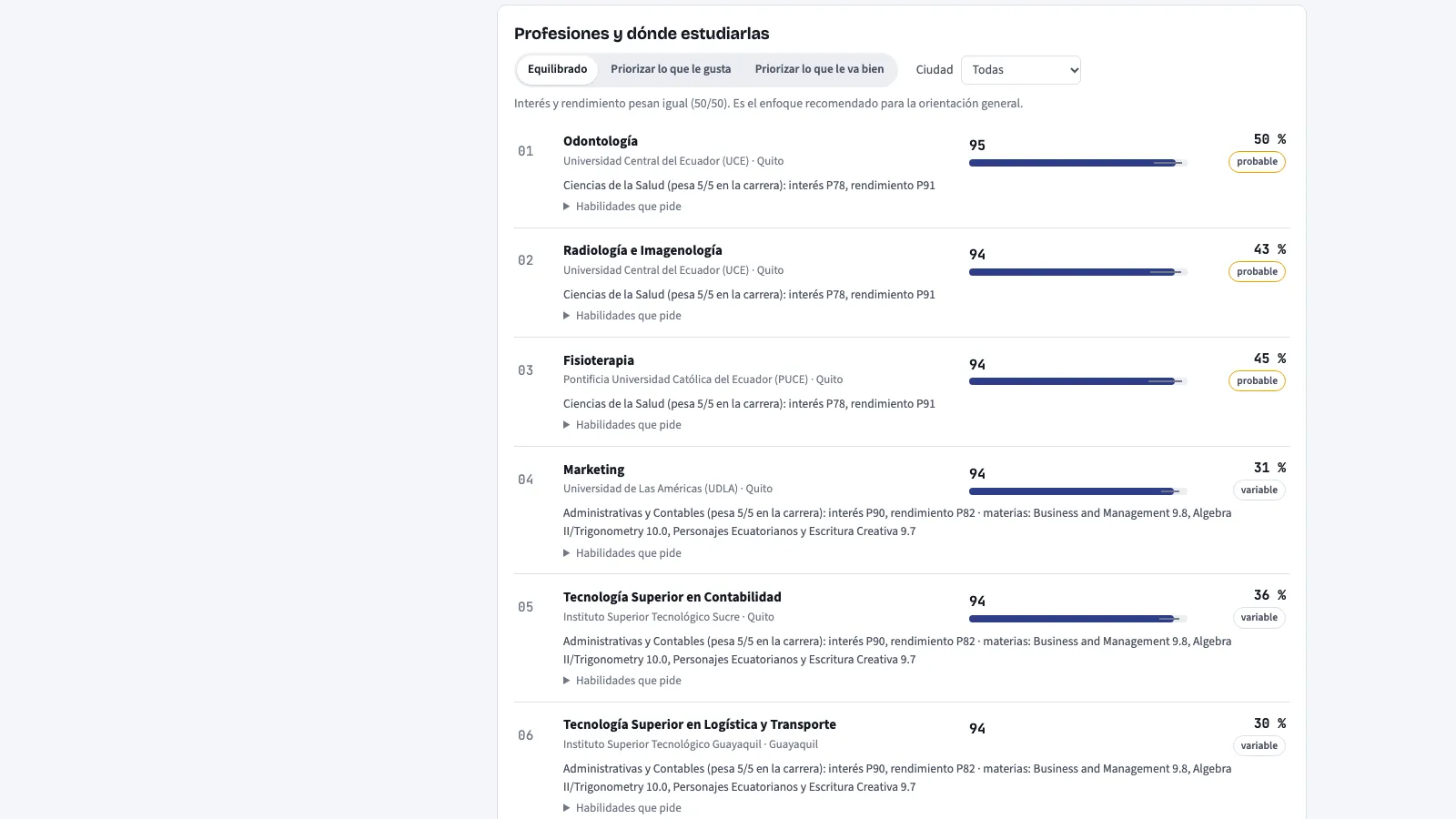
- From vocation to action: the 10 best-matched careers with the university and city where to study them, and three ways to rank them: balanced, prioritize what they like or prioritize what they do well.
06 · Creative solution
The right to say "I don't know"
The system has the right to say "I don't know". If its certainty does not exceed 60%, it does not assign a zone and marks the area as undetermined due to lack of evidence, instead of forcing a label. In the simulation that happened with 17% of the areas.
For a decision as important as choosing a career, an honest recommendation is worth more than an overconfident one. The tool supports counseling; it does not replace it.
07 · Deliverables
What the project includes
- Bayesian network model that integrates grades and vocational test
- Web platform with student and cohort views
- Career recommender with universities and cities in Ecuador
- Public validation survey for university students
- Model evaluation with fidelity metrics and the ISO/IEC 25059 standard
08 · Result
Next step: validate with real cases
The platform runs online with simulated data and the validation survey is already collecting real cases. The next step is to compare the system's recommendations with the careers university students chose and their satisfaction, before using it with the school's students.